
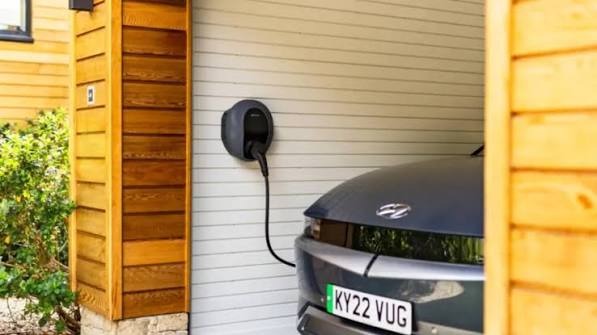
The moment you bring home an electric vehicle, the garage starts to feel different. That quiet corner with a few shelves and a dusty workbench suddenly becomes a fueling station. Charging at home is cheaper and more convenient than relying on public chargers, but it is also an electrical project with real safety and legal dimensions. A little planning now prevents tripped breakers, failed inspections and awkward conversations with your neighbors or landlord.
Level 1 and Level 2 charging
Level 1 charging uses a standard 120-volt household outlet and the cord that usually comes with the car. It is slow, often adding only a few miles of range per hour, which can be enough for a short commute or a plug-in hybrid. Level 2 charging uses a 240-volt circuit, similar to what an electric dryer or oven uses, and delivers much faster charging, commonly adding many miles of range per hour depending on the charger’s amperage and your vehicle’s limits. For most full EV owners, Level 2 is the practical choice.
Check your electrical panel first
Before you buy a charger, find out whether your electrical panel can handle one. A Level 2 charger is a large, continuous load, and electrical codes treat it that way. As a general rule, the circuit breaker is sized at 125 percent of the charger’s continuous current. A 32-amp charger typically needs a 40-amp circuit, and a 40-amp charger a 50-amp circuit. If your panel is already crowded or old, you may need a load calculation by an electrician. In some homes, the panel needs upgrading or the charger can be set to a lower current, and some smart chargers manage load automatically.
Plug-in or hardwired
Some chargers plug into a 240-volt outlet, such as a NEMA 14-50, while others are hardwired directly into the circuit. Hardwiring is often considered more robust and allows higher currents, while a plug-in model is more flexible if you move. Whichever you choose, the installation must use properly rated wiring, connectors and protective devices. Outdoor installations need weatherproof equipment, and ground-fault protection is commonly required.
Why you need a licensed electrician and a permit
It can be tempting to save money by doing it yourself or hiring a handyman. In most places, however, adding a new 240-volt circuit requires an electrical permit and inspection, and the work must be done by a licensed electrician, or at least checked by an inspector. There is good reason. EV chargers run for hours at high current, and a faulty connection can overheat and cause a fire. Unpermitted work can also cause problems with insurance claims and the sale of your home. A licensed electrician will handle the permit, run the wiring, install a dedicated breaker and test the system.
Planning the location
Put the charger where the car’s charging port can reach comfortably, taking into account where the vehicle parks. A shorter conduit run from the panel saves money. Leave room to hang the cable neatly, off the floor, so it is not driven over or tripped on. If you might get a second EV someday, ask the electrician about future capacity, such as running a heavier-gauge wire or conduit now.
Costs to expect
Costs vary. They include the charger itself, the electrician’s labor, the wiring distance, a possible panel upgrade, permit fees and any trenching if the charger is outside. A simple installation near the panel will cost much less than one that requires a long run or a service upgrade. Get at least two or three itemized quotes.
Incentives and rates
Utilities and local governments often offer rebates for chargers or special electricity rates for off-peak charging. Federal and state tax incentives have changed several times and may no longer be available, so check current programs before assuming anything. Time-of-use rates can make overnight charging noticeably cheaper.
HOA, condo and landlord considerations
If you live in a community with an HOA or in a condo, check the rules before you install anything. Several states and cities have laws that limit the ability of HOAs and landlords to prohibit EV chargers, often requiring the owner to pay for installation, carry insurance and follow reasonable guidelines. Renters should request permission in writing. A landlord may agree if you cover costs and agree to remove the equipment or leave it behind. If you park in a shared garage, talk to the building management about metering, so that you pay only for your own electricity.
Safety habits
Use the charger as intended, keep cables untangled and in good condition and do not use extension cords with a Level 2 charger. Keep the area free of clutter and flammable materials. Test the ground-fault device periodically, and have the system checked if you notice heat, burning smells or tripping.
The bottom line
A home charger is a great addition, but treat it like the serious electrical project it is. Check capacity, use a licensed electrician, pull the permit, confirm the HOA or landlord’s position and shop for incentives. Done right, it will serve you for years.