
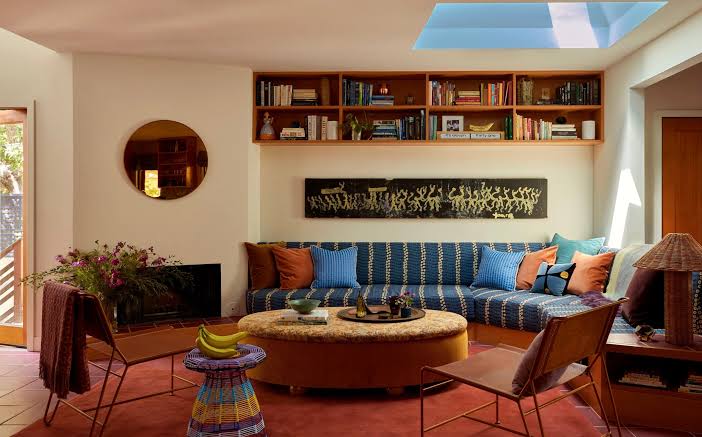
Most living rooms are not badly decorated. They are badly arranged. A beautiful sofa pushed flat against the wall, a coffee table out of reach and a TV nobody can watch comfortably will make a room feel awkward no matter how nice the pieces are. The good news is that good layout follows a handful of principles, and you can apply them without buying anything new. Often you only need to move the furniture.
Start with the focal point
Every room needs a destination for the eye. It might be a fireplace, a large window with a view, a TV or a striking piece of art. Decide what it is, and arrange your seating to acknowledge it. If you have two competing focal points, such as a fireplace and a television on opposite walls, choose which one wins, or angle seating so both are comfortable.
Measure and draw a plan
Grab a tape measure and sketch the room, marking doors, windows, vents, outlets and radiators. Measure your furniture, too. You can cut cardboard or paper templates to scale and move them around on your sketch, or tape out the footprint of each piece on the floor with painter’s tape. This prevents the classic mistake of lugging a heavy sofa across the room only to discover it blocks the door.
Pull furniture away from the walls
It feels counterintuitive, but pushing everything against the walls often makes a room feel smaller and colder. In many rooms, floating the sofa a few inches to a couple of feet away from the wall creates a more intimate conversation area and gives the room breathing space. In a small room, you may need to keep pieces closer to the wall, but even a few inches helps the room breathe.
Create a conversation zone
Seating should face each other so people can talk without shouting. A common guideline is to keep seats within about eight to ten feet of each other. Arrange a sofa and two chairs in a U shape, or two sofas facing one another, or an L-shape. Avoid lining everything along one wall like a waiting room.
Keep comfortable distances
Some measurements make a room function. Leave about 14 to 18 inches between the sofa and the coffee table, so you can reach it but still walk by. Provide 30 to 36 inches for main traffic paths, and at least 24 inches between smaller pieces where people need to pass. Keep end tables close enough to reach a drink, and place lamps at a height so light falls on the seating area.
Plan the traffic flow
Walk through the room as if you were arriving from each door. Your path should be natural and unobstructed. Avoid forcing people to squeeze behind chairs or climb over coffee tables. A room that flows well feels spacious, even if it is small. If the main route cuts through the seating area, use the furniture to define a gentle path along the edge.
Anchor with a rug
A rug ties the arrangement together. Ideally, at least the front legs of every piece of seating should sit on it, which makes the group feel unified. In larger rooms, all legs can rest on the rug. A rug that is too small looks like a postage stamp floating in the room. Common sizes for living rooms include 8 by 10 or 9 by 12 feet, depending on the space.
Handle the TV
Place the television at a comfortable viewing height, with the center of the screen roughly at eye level when seated. Avoid mounting it too high, which strains the neck. Reduce glare from windows by positioning seating at an angle or using curtains. If the TV is not the focus, consider a layout where it does not dominate the room, perhaps on a media console that can be closed away.
Balance the visual weight
Distribute large and dark pieces around the room, rather than clustering them on one side. A big sofa on one wall can be balanced by a bookcase or a pair of chairs opposite. Vary heights by adding tall plants, floor lamps and wall art to draw the eye upward.
Small spaces and open plans
In a small living room, choose multipurpose furniture, use light colors and keep the middle open. In an open-plan layout, use rugs, sofas with their backs to the dining area and consoles to define zones. Avoid putting the sofa back directly in the walkway.
Safety and practical details
Keep cords tidy and out of the walking path to prevent tripping. Leave clear access to exits and windows for safety, and avoid blocking heating vents or radiators, which wastes energy and can be a fire risk. Anchor tall furniture such as bookcases to the wall.
Try, live with it, tweak
Live with your arrangement for a week. Notice what feels awkward, and make small changes. A layout is never final. The best arrangement is the one that suits how you actually live.