
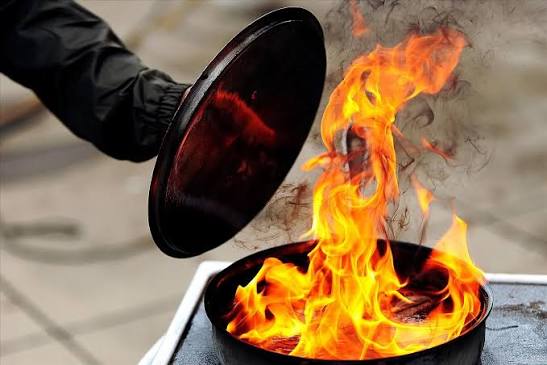
It happens fast. You are frying chicken, your phone buzzes, you glance away for a moment and when you look back, the oil is smoking and flames lick the edge of the pan. Your instinct says to grab water. That instinct is dangerous. Grease fires behave differently from other fires, and the wrong reaction can turn a small blaze into a house fire. Knowing what to do before it happens might save your home, and possibly your life.
Why water makes it worse
Oil and water do not mix. Water is heavier than oil and sinks beneath it, where it instantly flashes into steam and throws burning oil outward in a fireball. Never pour water on a grease fire. Do not use flour or sugar either, which can ignite or explode in the flames. Do not try to carry the burning pan outside, since you could spill flaming oil on yourself or the floor.
What to do right away
Stay calm, and follow these steps:
- Turn off the heat if you can do so safely. Removing the heat source helps stop the fire from growing.
- Smother the flames. Slide a metal lid or a baking sheet over the pan, and leave it in place. Cutting off the oxygen puts out the fire. Wear oven mitts and keep your arm back as you slide the cover on.
- Do not move the pan. Leave the lid on until the pan has cooled completely, which can take a long time, to avoid reigniting.
- For a small fire, pour a generous amount of baking soda over the flames. It can help smother a very small fire, but it takes a lot, and it is not effective on large flames. Do not use baking powder, which is different.
- Use a fire extinguisher if the fire is small and you know how. Class B extinguishers are for flammable liquids, and a Class K extinguisher is designed specifically for cooking oils and fats. A multipurpose ABC extinguisher can also be used on a small kitchen grease fire, though it will leave a mess. Remember PASS: Pull the pin, Aim at the base of the fire, Squeeze the handle and Sweep side to side.
- Get out and call emergency services if the fire spreads, if you cannot control it quickly or if you are unsure. Close the door behind you to slow the fire’s spread. Never go back inside.
If you are in doubt, leave. Property can be replaced.
What not to do
Do not use water. Do not fan the flames. Do not leave the kitchen. Do not attempt to move or carry the pot. Do not open the oven if the fire is inside it. Keep the oven door closed and turn it off, which may starve the flames of oxygen.
Prevention matters most
Most kitchen fires start with unattended cooking. Stay in the kitchen while frying, broiling or cooking at high heat. Keep the oil at a moderate temperature. If oil starts to smoke, it is too hot, so turn the heat down or take it off the burner. Use a pan with a lid within reach. Dry food thoroughly before it goes into hot oil, as water causes spattering. Keep flammable items such as towels, paper and packaging away from the stove. Clean up grease buildup on stoves and hoods regularly. Wear close-fitting sleeves, and keep children and pets away from the cooking area.
Equip your kitchen
Keep a fire extinguisher accessible, not directly beside the stove where flames might block it, but near an exit. Check the gauge regularly, and replace or service it according to the manufacturer’s instructions. Consider a fire blanket. Install smoke alarms in or near the kitchen and test them monthly. Fire safety experts also recommend a heat alarm near kitchens where smoke alarms trigger often.
Renters and landlords
In many places, landlords are legally required to provide working smoke alarms and sometimes carbon monoxide detectors, and to maintain them or ensure tenants can. Tenants are generally responsible for testing alarms and replacing batteries, and for not tampering with them. Report broken or missing alarms in writing. A renter’s insurance policy can cover your belongings and temporary living costs after a fire, and it may include liability coverage if you accidentally damage the building.
After a fire
Even if you put out the fire, call the fire department if there was any significant flame or smoke, to make sure nothing is smoldering. Contact your insurer or landlord promptly, and document the damage with photos and a list of items. Keep receipts for emergency expenses. Do not use cooking oil that was involved in a fire or any appliance that is damaged. Ventilate the home to clear smoke and clean surfaces carefully, since soot and residue can be harmful.
Practice your plan
Talk with your household about what to do in a kitchen fire and where the exits and extinguisher are. A few minutes of preparation can make the difference.