
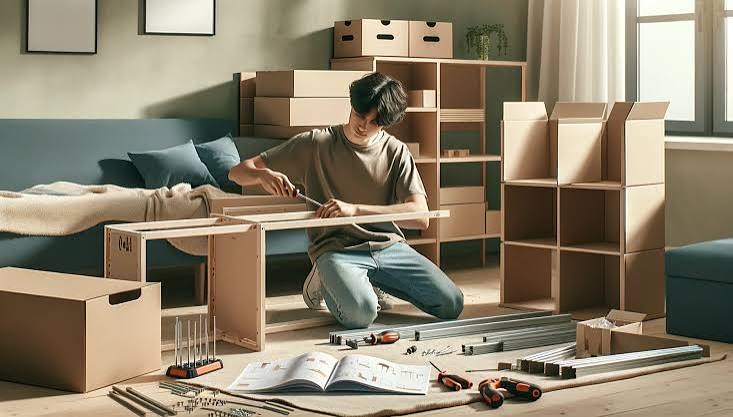
Everyone knows the feeling. The box is heavier than expected, the instructions are a series of cheerful drawings without words, and somewhere in the pile of hardware is a bag of screws that look identical but are definitely not. Flat-pack furniture can be a fantastic bargain, but only if it ends up standing straight. A few habits make the difference between a sturdy bookcase and one that sways every time someone walks past.
Check the box before you open anything
Inspect the packaging as soon as it arrives. If the carton is dented, torn or wet, take photos before you unpack. Hidden damage to panels is more common than people think, particularly on corners and edges. If something is wrong, you will want evidence for a return or replacement, and some retailers set short time limits for reporting delivery damage.
Make space and sort the parts
Clear a generous area of floor, ideally on a rug, blanket or the flattened cardboard from the box so that you do not scratch the panels or the floor. Open the box carefully and lay out each panel. Compare every part and every piece of hardware against the parts list in the manual. Use small bowls or a muffin tin to sort screws, dowels and cam locks. Counting everything at the start tells you immediately if something is missing, rather than halfway through when you are stuck.
Read the whole manual first
It is tempting to jump in, but skim the entire set of instructions before you start. Pay attention to the orientation of panels, front and back, and the direction of pre-drilled holes. Most mistakes happen because a piece is attached upside down or backwards, and nobody notices until three steps later. Mark panels lightly with a pencil or painter’s tape if needed.
Use the right tools
The little Allen key in the box works, but it is slow and wears out your hand. A basic set can help: a Phillips screwdriver, a hammer or rubber mallet, a drill or electric screwdriver with a clutch setting, and a spirit level. If you use a power tool, set it to a low torque so you do not strip screws or split particleboard. Tighten the final turns by hand.
Do not fully tighten until the frame is assembled
This is the pro tip that fixes most wobble. Assemble the main structure with all screws and cam locks snug but not tight. Once all sides are connected, check that everything is square, then tighten each fastener. Doing it too early can force parts out of alignment and make it difficult to fit the final pieces.
Handle cam locks and dowels gently
Cam locks should be turned only until they grip. Over-turning breaks them or damages the panel. Dowels need to be fully seated, and if they are loose, a drop of wood glue helps. Hammer gently, using a block of wood to spread the force. Particleboard dents and crumbles under harsh blows.
Watch the back panel
The thin fiberboard back panel is not just cosmetic. It keeps the frame square. Check the corners using a measuring tape across the diagonals. If both measurements are equal, the piece is square. Then nail or screw the back panel on, keeping it aligned. A crooked back will lead to crooked drawers and doors that do not close.
Adjust doors and drawers last
Hinges and runners have adjustment screws that let you nudge doors and drawers into place. Make small adjustments, one at a time, and check how they open and close.
Anchor tall pieces to the wall
Bookcases, dressers and tall cabinets can tip, which is a serious hazard, especially for children. Most flat-pack companies include anchoring hardware. Use it. Locate a wall stud or use wall anchors rated for the load. This is not optional if there are children or pets in the house. Safety standards for stability exist because tip-over accidents injure and kill every year.
If a part is missing or broken
Stop, and contact the manufacturer or retailer, keeping your order details and photos. Many companies send replacement parts for free. Do not improvise structural parts using substitutes that might fail under load.
Returns and warranties
Keep the packaging and the receipt until you are sure the piece is sound. Warranties often exclude damage from incorrect assembly or moving the piece after construction, so follow the instructions carefully, and note the date you built it. Moving a built piece is a common cause of cracks, so ask whether it is designed to be disassembled.
Patience pays
Building furniture is easier with two people, and a little music. Take breaks if you get frustrated, and recheck the step before forcing anything. A well-built flat-pack piece can last for years.