
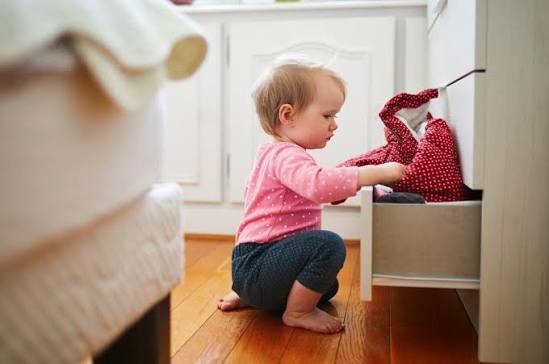
It takes only a few seconds, and it can happen in any home. A toddler pulls open the bottom drawers of a dresser, climbs up to reach a toy on the top and the whole piece tips forward. Furniture tip-overs injure thousands of children every year, and sadly some do not survive. What makes this so heartbreaking is how preventable it is. A few dollars of hardware and twenty minutes of work can make a heavy piece of furniture stay where it belongs.
Which furniture is the risk
Any tall, top-heavy piece can tip. That includes dressers, chests of drawers, bookcases, wardrobes, cabinets, entertainment centers and TV stands, particularly older ones holding heavy televisions. Drawers are a special hazard, because opening several at once shifts the center of gravity forward, and a child can use them as steps. Even a piece that seems stable can topple when someone climbs on it or pulls on it.
Why anchoring works
Anchoring ties the piece to the wall, so it cannot fall forward. Straps, brackets or L-brackets connect the top or back of the furniture to a wall stud. They are inexpensive, widely available and effective. It does not matter if the piece is heavy, because the forces involved in a tip-over can exceed what you expect. A securely anchored piece buys time and prevents the worst outcome.
What you will need
A stud finder, a drill, a screwdriver, a pencil, a level and the anchoring kit. Many kits include nylon straps with brackets, or metal L-brackets. Choose hardware appropriate to your wall and furniture. If you have drywall without a stud at the right place, use heavy-duty anchors rated for the load, or move the furniture to align with a stud. Plastic wall plugs by themselves are not enough.
Step-by-step installation
- Find the studs. Use a stud finder, and mark the center of the stud behind where the furniture sits.
- Position the furniture against the wall and mark where the brackets will attach on the back or the top rail, whichever the instructions recommend.
- Attach one end of the bracket or strap to the furniture using the supplied screws. Avoid screwing into thin particleboard backs. Fix into the solid frame wherever possible.
- Attach the other end to the wall stud with a screw long enough to bite securely, usually at least one and a half inches into the stud.
- Tighten the strap so there is little slack, and check that the furniture cannot be pulled forward.
- Test it. Gently pull on the top. It should not move.
If you have two anchoring points, use both for greater stability.
Extra steps that help
Place heavier items on the lower shelves and drawers, and keep the top lighter. Do not put a television, toys or tempting items on top of a dresser that a child can reach. Keep TVs on furniture designed for them, or mount them on the wall. Use drawer stops so they do not open fully, and consider child-safe locks.
Safety standards and recalls
In recent years, safety rules for clothing storage furniture have tightened in the United States, with a federal stability standard for new dressers coming into effect in 2023. Even so, older furniture is not covered, and many pieces in homes today were made before such standards. Check whether your furniture has been recalled by searching the consumer product safety agency website for the brand and model. If a recall includes a free repair kit or refund, take advantage of it. Register new furniture with the manufacturer so you hear about future problems.
Renters and anchoring
Tenants often worry about putting holes in walls. In most cases, a few small screw holes are minor, easy to patch and far less costly than an injury. Ask your landlord for permission, and mention that it is a safety measure. Some landlords supply anchoring kits. If you are worried, ask in writing and keep the reply.
Secondhand furniture and hand-me-downs
Used pieces may lack anchors, have worn runners or sit unevenly. Examine them before you bring them home. Check for recalls, and make sure the piece is stable and has working drawer stops. Do not assume a heavy antique is safe. Heavy pieces can be even more dangerous.
If you travel or visit
Children are at risk in other people’s homes too. When visiting family or staying in a rental, check the furniture, and if you can, move it away or anchor it.
A simple routine
Walk around your home with a critical eye. Anchor every tall piece. Check hardware after a few months, since screws loosen. It is a small job that protects what matters most.